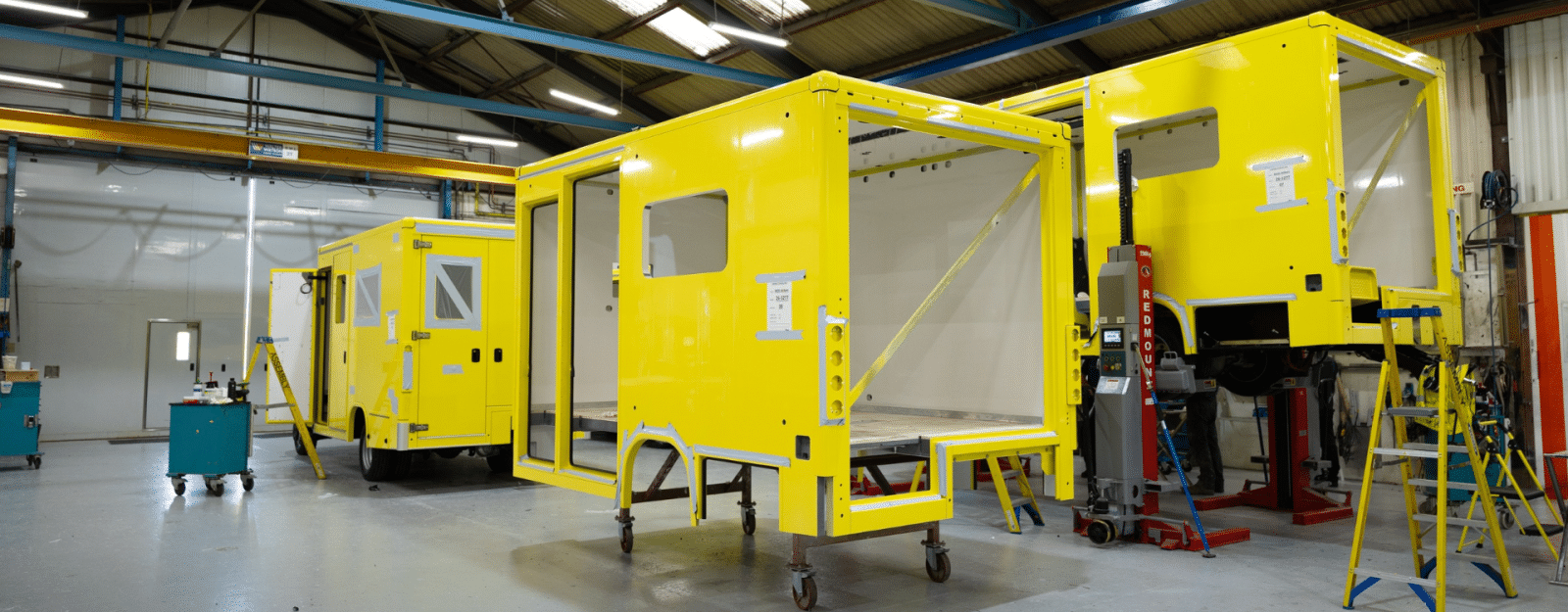
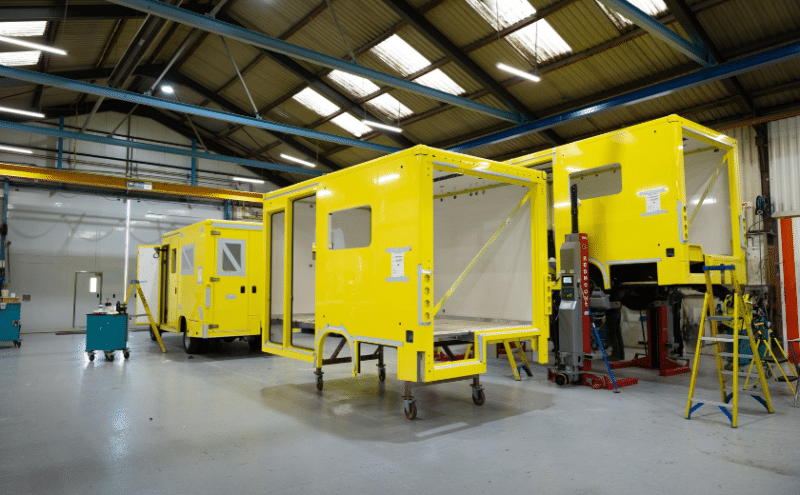
Based in Athenry, in County Galway, Quinn Vehicles is a family business specialising in high-specifi cation bespoke vehicles – in particular, emergency response vehicles, specialist refrigerated trucks and mobile cold storage units.
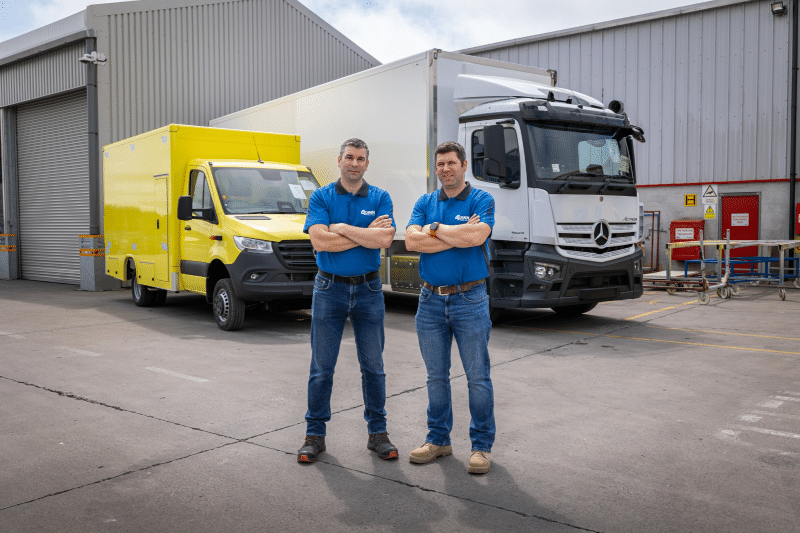
For example, it manufactures ambulances for services across the UK, the USA, Australia and the Middle East – including customers such as the London Ambulance Service. Founded over 200 years ago by a blacksmith, John Quinn, the company is today run by the fifth generation of his descendants, brothers Micheàl and Seamus Quinn.
Founded over 200 years ago by a blacksmith, John Quinn, the company is today run by the fifth generation of his descendants, brothers Micheàl and Seamus Quinn. The company today is at the forefront of technology, employing advanced manufacturing equipment and is a specialist in the use of composite materials – with everything designed, developed and manufactured in-house.
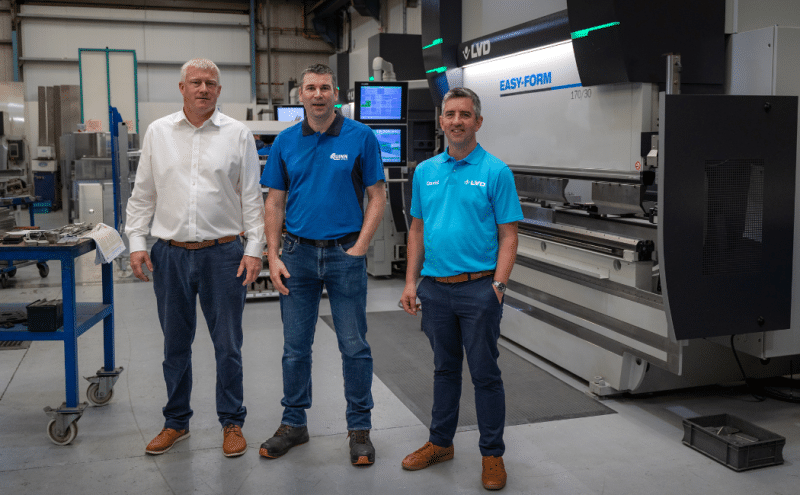
As Micheàl Quinn explains:
“Everything is based around composites. That is our USP, and it allows us to offer a superior product.
“A composite-based ambulance offers significant advantages over traditional metal-based vehicles. Not only is it a more modern, lighter vehicle, but it also offers significant improvements in temperature control and patient comfort.
“A lot of our ambulances are destined for customers in hot climates – such as parts of the USA, Australia and the Middle East. A traditional ambulance is very difficult and expensive to keep cool in these conditions, whereas ours is effectively an insulated box so it is much more comfortable for the patient.”
There is still a lot of metal in a composite ambulance though.
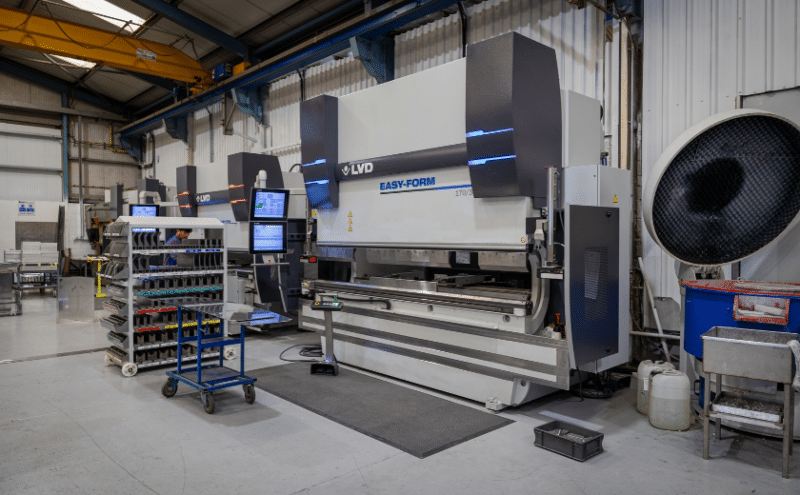
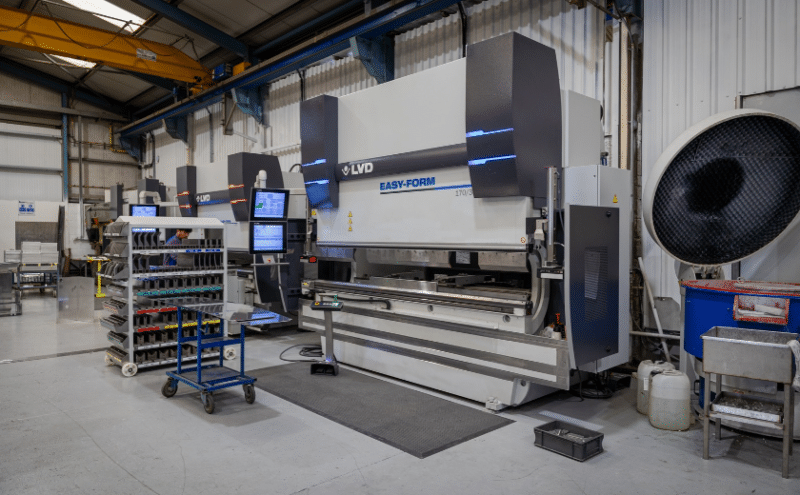
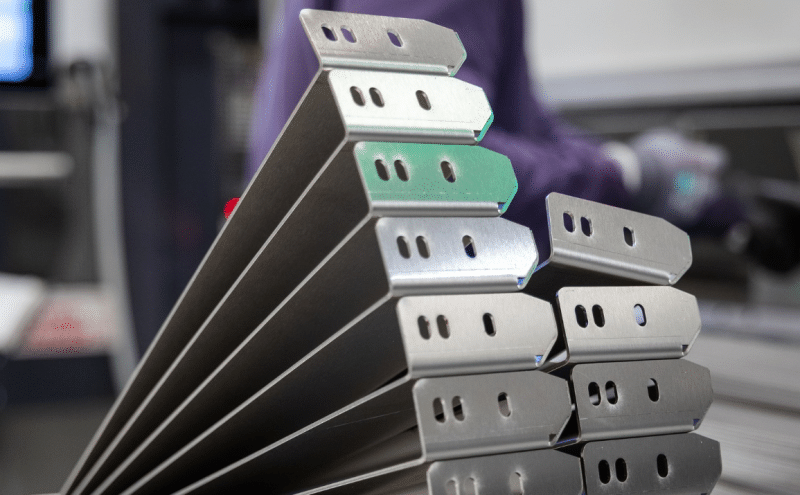
“It’s a combination of composites and sheet metal,” says Micheàl, “and sheet metal is a huge part of our business. A lot of components, access doors, frames, brackets, and so on are sheet metal and that’s why we have upgraded our sheet metal manufacturing capacity with the new laser and press brakes from LVD.”
As Micheàl explains:
“What we make is a combination of newly designed elements and repeating elements. Ambulances may all look roughly similar, but in reality, no two regions’ ambulances are the same. So, we take a basic standard design and adjust that to suit the customer’s needs.”
All the sheet metal parts are designed and built up in SOLIDWORKS. They are then imported to the CADMAN software, flattened and sent to the machines.
“I think the phrase I’ve seen used by LVD is ‘Art to Part’. Well, it really is. From the design concept to flat pattern to the folded part. We have to design, maybe nine or ten parts a day and I can guarantee that nine would be spot on and the tenth might need a little tweak. It is very good. It’s not just a sales pitch. It actually works. And because programming is so much faster, we can get through the work much faster.”
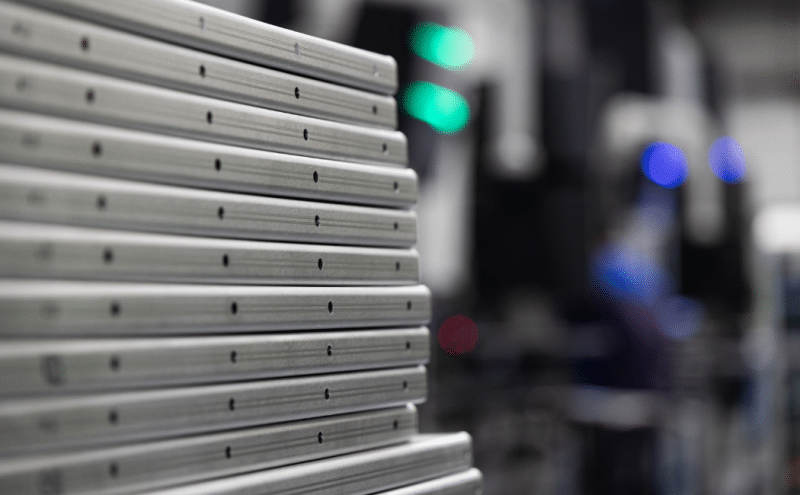
The new machine investments were on one hand about increasing capacity, but in the case of the press brakes it was also about increased accuracy and an element of deskilling.
The LVD Puma 3015 6kW fiber laser, with a 3m by 1.5m sheet capacity, replaced an older LVD Lynx machine.
“We changed the laser primarily because of capacity,” says Micheàl. “As our volume of work grew the Lynx just couldn’t provide the capacity we needed. We work a four-day, 10-hour a day compressed week from Monday to Thursday. On top of that we were having to run the laser on late shifts and all day Friday. Sometimes we had to run it on Saturday too just to meet demand. And even if you are only running one machine you still need a supervisor, the lights on and the compressor running. It is just inefficient.
Micheàl explains that the sheet followers reduce the skill required to fold large parts. The blank for a typical aluminium panel can be just 2 or 3 millimetres thick, but 2 metres long and 700mm wide. If not handled correctly it can buckle during bending and get damaged during forming.
He says:
“If the operator is not skilful enough you can get corner dents where they are not following the part. The sheet follower axis supports the part through the bend, allowing one person to handle it more easily and helping to prevent damage.”
The company’s relationship with LVD has been close and enduring.
Micheàl Quinn says that they bought their first LVD machine in 2006 and that he has been a firm supporter of their equipment ever since.
“When we had an idea that we were going to change the laser and the two press brakes, we looked at the equipment, and it all made sense for us. There was no hard sell, the LVD equipment sells itself.”
The fact that, like Quinn Vehicles, LVD is also a family-business also strikes a chord, says Micheàl.